


“I'd spent over £800 at the vet on antihistamines with no real answers. The dog allergy bundle gave us a clear report showing severe dust mite and chicken reactions. We changed his food and the scratching reduced dramatically within three weeks.”
Dog Allergy Test
At-home allergy tests for dogs are convenient kits that use a small blood sample to screen for sensitivities to many environmental and food triggers including common grasses, pollens, dust mites and specific food proteins.
Our tests require a quick prick on the inner ear flap or paw pad to collect a few drops of blood on a sample card. You mail the sample to our UKAS accredited lab and digital results are emailed to you in 5-7 days.
Couldn't load pickup availability

100% Moneyback guarantee

FREE Shipping on physical tests

Trusted and accredited

Trusted by 50,000+ customers
IgE gold standard in allergy diagnostics
IgE gold standard in allergy diagnostics
✓ Measures actual IgE antibody concentrations in the blood - the same immune marker vets test for
✓ Scientifically validated methodology used in professional veterinary allergy clinics
✓ Distinguishes between true IgE-mediated reactions and coincidental sensitivities
✓ Results actively used by vets to guide immunotherapy and elimination diets
✓ UK laboratory analysis with full clinical oversight
Identify 125 common allergens
Identify 125 common allergens
Identify 125 common allergens affecting your dog, including both food-related and environmental triggers, from the comfort of your home. Unlike intolerance tests, this is a scientifically backed blood test that detects actual allergic reactions, giving you the clarity you need to take real action. Please see the images for the full list of 125 tested allergens.
UK accredited lab testing
UK accredited lab testing
- A comprehensive range of health tests and services
- Over 30 years of laboratory experience
- State-of-the-art equipment, quality standards and techniques
- Excellent, personalised care
- Accurate and reliable results
- Fast turnaround time – results within days
- Affordable pricing
Fast results
Fast results
Everything is designed to be simple, fast, and stress-free—for both you and your pet.
Simple at-home sample collection
Easily collect a small blood sample from your pet in minutes—no vet visits or invasive procedures required.
Comprehensive 125-item analysis
Your pet’s sample is analysed across a wide range of food and environmental categories, including:
• Trees & Pollens
• Grasses & Weeds
• Mites & Household Allergens
• Moulds & Yeasts
• Animal & Insect Allergens
• Meat Proteins
• Fish & Seafood
• Dairy & Egg
• Grains & Cereals
• Fruit & Vegetables
Fast results
Once your sample reaches the lab, your results are delivered directly to your inbox 3-5 working days.
Clear, easy-to-understand report
Your report highlights potential allergies and gives you practical, actionable guidance—so you know exactly what steps to take next.
No guesswork. No waiting. Just clear answers to help your pet feel their best.



Find the answers your dog deserves
A single blood sample. Up to 125 allergens.
A report your vet can use.
Why choose a dog allergy blood test?
Understanding your dog's allergies is essential for their health and wellbeing. A dog allergy blood test provides accurate, comprehensive results that help identify specific allergens affecting your pet. Unlike elimination diets that can take months, our blood test delivers clear insights quickly, allowing you to make informed decisions about your dog's diet and environment.
Our veterinary-approved testing process is simple, stress-free, and can be done from the comfort of your home. With detailed results covering food sensitivities, environmental triggers, and seasonal allergens, you'll have everything you need to help your dog live a happier, healthier life.
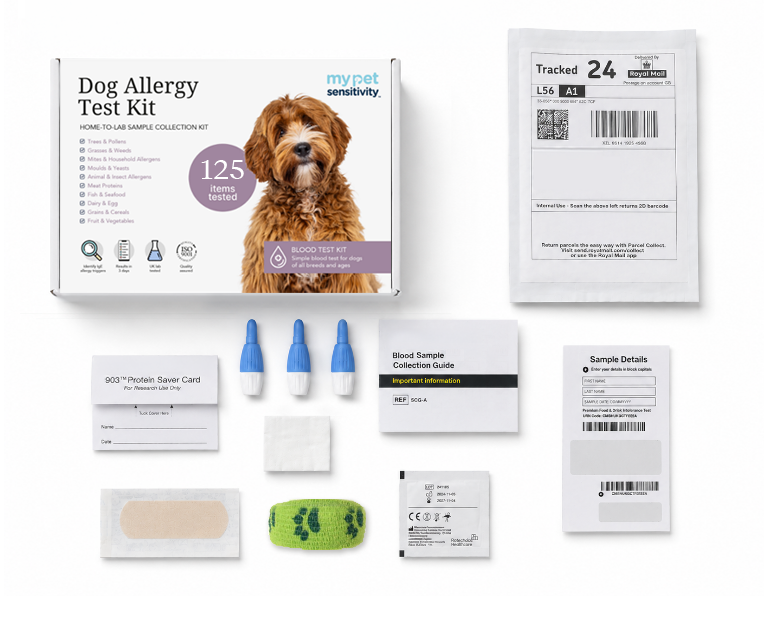
what's included?
What you get
Everything you need for accurate results;
• Easy-to-follow instructions
• Alcohol cleansing wipe
• Absorbent pad
• Adhesive Plaster
• Cohesive bandage
• 3x single-use lancets
• Blood spot card
• Blood spot card transport bag
• Postage paid return envelope
How our dog allergy test works
-

Your allergy report, explained clearly
Every allergen is scored by IgE concentration level. Your report highlights the most significant triggers and recommends next steps for you and your vet.
Class 0: Not detected
For levels ≤ 0.34
Class 1: Low detection, possible mild allergic response
For levels 0.34 - 3.49
Class 2: Moderate detection, potential allergic response
For levels 3.50 - 49.99
Class 3: High detection, strong allergic response
For levels ≥ 50.00 -

Why trust our laboratory?
Our accredited UK laboratory uses the same IgE serology technology deployed in specialist veterinary allergy clinics. Every sample is processed by qualified technicians and reviewed against clinical reference ranges.
• UK-Accredited laboratory
• Advanced allergen-specific IgE analysis
• Reviewed by qualified lab technicians
• Clinically referenced scoring
• Results typically within 5 business days of sample receipt
• UK-based with samples analysed in our own UK lab
• Vet-ready reports for easy discussion
This is a laboratory blood test performed using advanced advanced Multiplex laboratory technology used in veterinary allergy investigations.


Our simple process...
-

1. Activate test
Activate your test online using your unique and secure reference number
-

2. Collect sample
Follow the simple instructions provided to collect a small drop of blood
-

3. Send blood back
A postage-paid returns envelope is included within your test kit.
-

4. Fast results
We'll send a personalised report within 5 days of arrival at our testing facility.

Which allergens are tested?
Panel 1 - Environmental Focus (64 items)
Acacia
Acarus siro
Alder
Alternaria alternata
Apple
Aspergillus fumigatus
Beef
Bermuda grass
Birch
Candida albicans
Carrot
Cat epithelium & dander
Cheddar/Gouda cheese
Chicken
Cladosporium herbarum
Cockroach
Codfish
Common ragweed
Corn
Cottonwood
Crab
Cultivated rye
Dermatophagoides farinae
Dermatophagoides pteronyssinus
Duck meat
Egg white
Egg yolk
Feather mix
Flea
Hazel
Lamb meat
Mackerel
Malassezia pachydermatis
Maple leaf sycamore
Milk
Mugwort
Oak
Orchard
Pea
Peanut
Penicillium notatum
Plantain
Pork
Potato
Pumpkin
Red deer
Rice
Ryegrass
Salmon
Sheep’s sorrel
Shrimp
Soy bean
Sweet potato
Timothy grass
Tomato
Tuna
Turkey meat
Tyrophagus putrescentiae
Wheat
White ash
White pine
Willow
Wool (sheep)
Yeast (Baker’s)
Panel 2 - Food & Dietary Focus (61 items)
Anchovy
Banana
Barley
Bee venom
Bent grass
Blomia tropicalis
Blue mussel
Blueberry
Broccoli
Buckwheat
Buttermilk
Cabbage
Casein
Cattle epithelium
Cauliflower
CCD
Clam
Common reed grass
Common pigweed
Cucumber
Dandelion
Fire ant
Gluten
Glycyphagus domesticus
Goldenrod
Herring
Hevea latex
House dust
Japanese cedar
Japanese hop
Kiwi
Lentil
Linseed (Flax seed)
Mango
Melon
Millet
Mosquito
Oat
Orange
Ox-eye daisy
Paprika
Parsley
Peach
Pear
Pineapple
Plum
Rabbit
Radish
Russian thistle
Sardine
Sea bass
Silkworm pupa
Spinach
Strawberry
Sweet chestnut
Sweet vernal grass
Trout
Watermelon
Yeast (Brewer’s)
α-lactalbumin
β-lactoglobulin.
Bundle - Panel 1 + Panel 2 (125 items)
The "Bundle" includes all 125 allergens listed above - a combination of the Panel 1 - Environmental Focus (64 items) and Panel 2 - Food & Dietary Focus (61 items) panels.
What our customers think
Frequently asked questions
ABOUT DOG ALLERGIES
What are the most common dog allergies?
The most common allergies in dogs fall into three categories:
- Environmental: house dust mites (the most prevalent), grass and tree pollens, moulds, and flea saliva
- Food: chicken and beef are the most frequently identified food allergens in dogs, followed by wheat, dairy, and lamb
- Contact: reactions to certain shampoos, chemicals, or plants the dog walks through
In the UK specifically, house dust mites and grass pollens (especially Timothy grass) are the leading environmental triggers. Many dogs react to more than one allergen simultaneously, which is why a comprehensive panel is often most useful.
What symptoms suggest my dog has allergies?
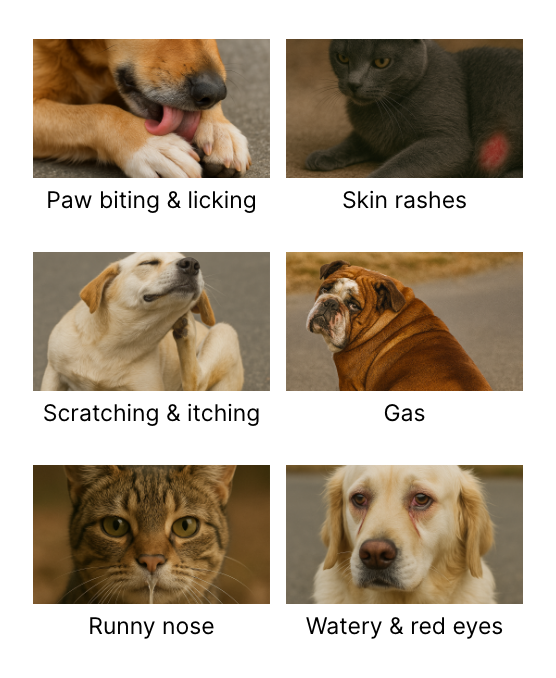
The most common signs of allergic disease in dogs include: persistent itching or scratching (especially face, paws, ears and groin), recurring ear infections, paw licking or chewing, red or inflamed skin, tear staining around the eyes, skin thickening or darkening in chronic cases, and recurrent skin or ear infections. Digestive signs (loose stools, vomiting) can sometimes accompany food allergies. These symptoms can also have other causes, so a blood allergy test helps distinguish true IgE-mediated reactions from other conditions.
Can puppies get allergies? At what age can they be tested?
Allergies in dogs typically develop between 6 months and 3 years of age, though they can appear later in life. Testing is generally most meaningful from around 12 months onwards, once the immune system has matured and has had sufficient allergen exposure to produce measurable IgE levels. Testing very young puppies (under 6 months) is less reliable and not usually recommended. Please consult your vet about the best time to test your dog.
Are some dog breeds more prone to allergies?
Yes. Certain breeds have a significantly higher prevalence of atopic (allergic) skin disease, including West Highland White Terriers, Bulldogs, French Bulldogs, Boxers, Labrador and Golden Retrievers, German Shepherds, Cocker Spaniels, and Dalmatians. However, allergies can affect any breed or crossbreed. If you have one of these predisposed breeds showing allergy symptoms, early testing is especially worthwhile.
ABOUT THE TEST
What is a dog allergy test used for?
A dog allergy test measures IgE antibody levels in your dog's blood against specific allergens. It is used to:
- Identify which specific allergens are triggering your dog's symptoms
- Distinguish between food and environmental causes
- Guide dietary changes (e.g. switching to a hypoallergenic food avoiding identified triggers)
- Inform your vet's recommendation for environmental management or allergen-specific immunotherapy (ASIT)
- Provide a baseline to track your dog's allergy profile over time
The results are a diagnostic and should be interpreted alongside your dog's clinical history and discussed with your vet.
Which panel should I choose — Panel 1, Panel 2, or the Bundle?
- Panel 1 is best if your dog's symptoms are worse seasonally (spring/summer = pollens) or year-round indoors (likely dust mites), and you suspect environmental causes
- Panel 2 is best if symptoms are consistent regardless of season and you suspect diet — particularly if your dog is on a commercial food with chicken, beef, or grain
- The Bundle is recommended when you're unsure, or when your dog has complex or overlapping symptoms. Using one blood draw to screen all 125 items is the most cost-effective and thorough approach, and avoids the need for a second blood draw later
If in doubt, most of our customers opt for the Bundle.
WHY CHOOSE MY PET SENSITIVITY?
Why is an IgE blood test better than a hair sample test?
IgE (immunoglobulin E) is the specific antibody produced by the immune system during an allergic reaction.
Measuring IgE concentrations in blood is the clinically recognised method for allergy testing - the same approach used by veterinary dermatologists and specialist allergy clinics. Hair sample and bioresonance tests do not measure IgE.
IgE blood testing gives you results that your vet can use to guide treatment decisions, including allergen-specific immunotherapy.
How accurate is your test?
Our test uses validated IgE multiplex serology which is the same platform used in professional veterinary allergy investigations.
All results are scored against canine-specific clinical reference ranges. No allergy test can claim 100% sensitivity or specificity and results should always be interpreted in the context of your dog's symptoms and history.
Food allergy results in particular are most useful when combined with a dietary elimination trial. We will always recommend discussing your results with your vet.
Is our laboratory accredited?
Yes. My Pet Sensitivity holds ISO 9001 accreditation and our laboratory team operate within a UKAS-accredited testing laboratory No.4236 who also hold ISO/IEC 17025:2017.
Every sample is processed and reviewed by qualified laboratory technicians.
ORDERING & PROCESS
How long does it take to receive my results?
Once your blood sample arrives at our laboratory, results are typically available within 5 business days. You'll receive an email notification as soon as your report is ready.
Total time from ordering to results is usually 10–14 days, depending on how quickly you send your blood sample and how long the postage takes.
What's included in the kit when it arrives?
Your dog allergy test kit contains:
• Easy-to-follow instructions
• Alcohol cleansing wipe
• Absorbent pad
• Adhesive Plaster
• Cohesive bandage
• 3x single-use lancets
• Blood spot card
• Blood spot card transport bag
• Postage paid return envelope
Everything you need is included - you don't need to provide anything extra.
Can my dog be on medication when the test is done?
Certain medications particularly immunosuppressants like ciclosporin, steroids (prednisolone) and some antihistamines can suppress IgE levels and may affect test accuracy.
Ideally, your dog should be off immunosuppressive medications for a period before testing (typically 4–8 weeks for steroids - your vet can advise).
Antihistamines have a lesser effect on IgE blood tests compared to intradermal skin tests. Always discuss your dog's current medications with your vet before proceeding.

Vet Street's Choice: Best Dog Allergy Test at Home!
We've been named the "Best Dog Allergy Test at Home" by Vet Street. This recognition underscores our commitment to providing pet owners with a reliable and user-friendly solution to understand their furry companions' well-being.
More than just a test result with 24/7 Vetline.™
- 24/7 access to veterinary advice
- Instant advice via chat, phone or video
- Triage, nutrition, behaviour and more
- Avoid expensive out of hours vet bills